
Home › Practice Areas › Criminal Defense
Criminal Defense Lawyer in Lubbock
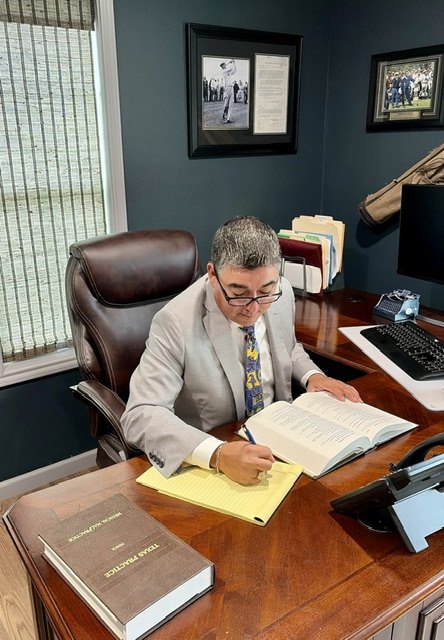
Nick L. Olguin handles felony and misdemeanor charges in Lubbock County and the surrounding counties, from the first bond hearing to trial. He has been licensed to practice law in Texas since December 2002. His office at 1306 Avenue R in Lubbock has Spanish-speaking staff.
Office hours: Monday to Thursday 8:30 a.m. to 5:30 p.m., Friday 8 a.m. to 5 p.m.
What Nick handles
Nick’s criminal work leads with felonies.
Violent and aggravated felonies
Including aggravated assault: charges that involve a deadly weapon or serious bodily injury.
Burglary of a habitation and arson
After an arrest
What happens after an arrest in Lubbock County
The Lubbock County Detention Center at 3502 N. Holly Avenue is where most people arrested in the county are booked. What follows is set by Texas law and by Lubbock County’s own court rules:
The magistrate hearing
Lubbock County’s local rules require that you be brought before a magistrate within 24 hours of a misdemeanor arrest or 48 hours of a felony arrest. The Detention Center holds these hearings at least twice a day. They are usually held by video. The magistrate tells you the charge, explains your rights, including the right to a lawyer and the right to stay silent, and sets bail. After an arrest involving family violence, the magistrate can issue an emergency protective order at the same hearing, and must if the charge involves serious bodily injury or a deadly weapon.
Bond
Once bail is set, the amount appears on the county’s online jail roster. You can pay the full amount at the Detention Center’s bond window, or a licensed bail bond company can post it for a percentage of the amount. Texas law allows a personal bond, release on a promise to appear, only in very rare circumstances for charges the law calls offenses involving violence, such as aggravated assault, aggravated robbery and felony family violence. Two 2025 changes apply to the most serious charges: a county magistrate may not release a person charged with murder, capital murder or aggravated kidnapping on bail, so a district judge sets it, and for offenses committed on or after November 19, 2025, a judge can deny bail after a hearing for charges such as murder, aggravated robbery and aggravated assault with a deadly weapon or serious bodily injury. A lawyer can ask the court to lower the bail or change its conditions.
The formal charge
A misdemeanor is charged when the Criminal District Attorney’s office files it in a county court at law; a felony is charged when a grand jury indicts. Lubbock County’s judges have ordered that a person held in jail be considered for a personal bond or lower bail if the prosecutor is not ready for trial within 30 days of detention for most felonies, 45 days for the felonies Texas treats as most serious, or 15 days for a Class A misdemeanor. State law allows 90 days for a felony; Lubbock’s rule is shorter.
Arraignment
Misdemeanors go to the county courts at law and felonies to the district courts, all at the Lubbock County Courthouse, 904 Broadway. The local rules call for misdemeanor arraignments within 30 days of the complaint and felony arraignments within days of the indictment. If you have not yet been arraigned, a waiver may be filed on your behalf and your attendance may not be necessary. If you have already been arraigned, the next step is typically a Plea Negotiation Conference.
Plea Negotiation Conference (PNC)
This is an opportunity to discuss your case with the District Attorney’s Office and determine whether a plea offer is available.
Consultation after the PNC
After the PNC, the case will be discussed with you to determine whether to accept an offer or proceed to pre-trial.
Pre-trial
Depending on the case, pre-trial may be evidentiary or non-evidentiary. The details of that setting will be discussed with you before the hearing.
Trial
The local rules aim to set cases as soon as possible after the indictment or information, and criminal trials take priority over civil trials in Lubbock County’s courts.
Punishment ranges
Misdemeanor or felony: what the grade means
Every Texas charge carries a grade, and the grade sets the range. A prior felony conviction or the use of a deadly weapon can move a charge up a level.
| Grade | Range | Examples |
|---|---|---|
| Class C misdemeanor | Fine up to $500, no jail | Assault by threat or offensive contact |
| Class B misdemeanor | Up to 180 days in jail, fine up to $2,000 | First DWI |
| Class A misdemeanor | Up to a year in jail, fine up to $4,000 | Assault causing bodily injury; second DWI |
| State jail felony | 180 days to 2 years in a state jail, fine up to $10,000 | DWI with a child passenger |
| Third-degree felony | 2 to 10 years in prison, fine up to $10,000 | Third DWI; assault on a public servant; intoxication assault |
| Second-degree felony | 2 to 20 years in prison, fine up to $10,000 | Aggravated assault; intoxication manslaughter; manslaughter |
| First-degree felony | 5 to 99 years or life in prison, fine up to $10,000 | Murder; aggravated robbery; aggravated assault with a deadly weapon causing serious bodily injury to a family member |
Your first meeting with Nick
Your first meeting is a consultation with Nick. The consultation fee is $100. If the person charged is still in jail, a family member can meet Nick first, and Nick meets clients at the Detention Center.
Bring what you have
- the booking paperwork, the bond paperwork and the jail roster entry
- anything the magistrate gave you, including an emergency protective order
- any citation, warrant, tow receipt or property receipt from the arrest
- court dates you have already been given
- your questions, written down
Say nothing about the case to anyone but your lawyer. The magistrate’s warning is accurate: anything you say can be used against you, and that includes what you say to friends, on social media and on the phone from jail.
Common questions
What should I do first after an arrest in Lubbock?
Find out the charge and the bond amount on the Lubbock County jail roster, arrange the bond, and talk to a lawyer before you talk to anyone else about what happened. The magistrate hearing happens within 24 hours for a misdemeanor and 48 hours for a felony under Lubbock County’s rules, and bail is set there. If you were released with a court date, keep it: missing it starts bond forfeiture under the local rules.
How much does a criminal defense lawyer cost in Lubbock?
The consultation is $100, and after it Nick can tell you what the case is likely to involve and what the firm charges for it.
Can I get out of jail before my case is over?
Usually, yes: the magistrate sets bail at the first hearing, and you are released when it is paid in cash at the Detention Center or posted by a bail bond company. Texas law allows a personal bond for offenses involving violence only in very rare circumstances, and a magistrate can attach conditions, such as an ignition interlock device after a repeat DWI arrest or an emergency protective order after a family violence arrest. Under Lubbock County’s rules, a person still in jail is considered for release or lower bail if the prosecutor is not ready for trial within 15, 30 or 45 days of detention, depending on the charge.
What is the difference between a misdemeanor and a felony in Texas?
A misdemeanor carries up to a year in county jail and a felony carries prison time, from 180 days in a state jail to life. Misdemeanors are heard in Lubbock County’s county courts at law and felonies in its district courts. The table above gives each grade’s range.
How long does a criminal case take in Lubbock County?
Lubbock County’s rules set targets of 30 days from complaint to arraignment in a misdemeanor case, 30 to 60 days from arraignment to the first setting where a plea offer is discussed in a felony case, and trial as soon as possible after the indictment or information, but a case that goes to trial often takes longer.
Will my case be in Lubbock?
If the arrest was in Lubbock County, yes: misdemeanors go to the county courts at law and felonies to the district courts at the Lubbock County Courthouse, 904 Broadway. The Criminal District Attorney’s office, which prosecutes both, is on the courthouse’s second floor. Nick also handles cases in the surrounding counties.
Can the person who reported me drop the charges?
No. In Texas the State brings the charge, so the decision to file, reduce or dismiss belongs to the Criminal District Attorney’s office, not to the person who called the police. What that person says still matters, and a lawyer can bring it to the prosecutor.
Does Nick handle federal cases?
Yes. Nick is admitted to the U.S. District Court for the Northern District of Texas, the federal court that covers Lubbock, and defends charges in state and federal court.
Does the office speak Spanish?
Yes. The office has Spanish-speaking staff, and a case can be handled in Spanish from the first call to court.
Which areas does Nick serve?
Nick handles criminal cases in Lubbock County and the surrounding counties: Hockley, Hale, Lamb, Lynn, Crosby, Garza, Dawson, Terry and Floyd.
About Nick L. Olguin
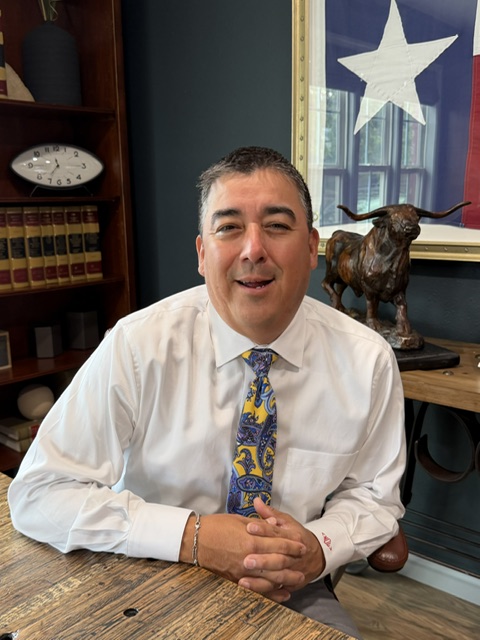
Nick L. Olguin graduated from law school at Oklahoma City University in 2002 and has been licensed to practice law in Texas since December 2002. He practiced in Amarillo from 2002 to 2007 and opened his own firm, Olguin Law Firm (legal name The Law Office of Nick L. Olguin), in Lubbock in February 2007. The office is at 1306 Avenue R, Lubbock, TX 79401. Nick is the only lawyer at the firm, and clients work with him from the first meeting to the end of the case.
Talk to Nick about your case
Call (806) 741-1111 or send the short form below. The office returns calls and messages by the next business day. Office hours: Monday to Thursday 8:30 a.m. to 5:30 p.m., Friday 8 a.m. to 5 p.m.
Olguin Law Firm · 1306 Avenue R, Lubbock, TX 79401
Please do not include confidential details in your message.
Sending this form does not make you a client of the firm. How the firm handles your information: Privacy Policy.
